Concrete Leveling
Lift sunken concrete back to level and eliminate trip hazards for a fraction of the cost of replacement.
Why Your Concrete Settled and What to Do About It
Sunken concrete is one of the most common problems property owners face. Your driveway, sidewalk, or patio was level when installed, but now one section sits lower than the rest. This creates an ugly step, collects water, and becomes a serious trip hazard.
Concrete settles when the soil underneath erodes or compacts. Water washing away soil is the main culprit. Rain, poor drainage, or leaking pipes all cause erosion under your concrete. As soil disappears, the slab loses support and sinks into the void.
Poor soil compaction during installation also leads to settling. If the ground was not properly compacted before pouring, it gradually compresses under the weight of the concrete. This can take months or years to show up, but eventually the slab drops.
The good news is you do not need to replace sunken concrete. Concrete leveling, also called mudjacking or slabjacking, lifts settled concrete back to its original height. This costs 50 to 70 percent less than tearing out and replacing the slab. Plus, the work takes hours instead of days, and you can use the surface almost immediately.
How We Level Your Concrete
We use two proven methods to lift sunken concrete: traditional mudjacking and modern polyurethane foam injection. Both work by pumping material under the slab to fill voids and raise it back to level. Each method has advantages depending on your situation.
Our concrete leveling methods:
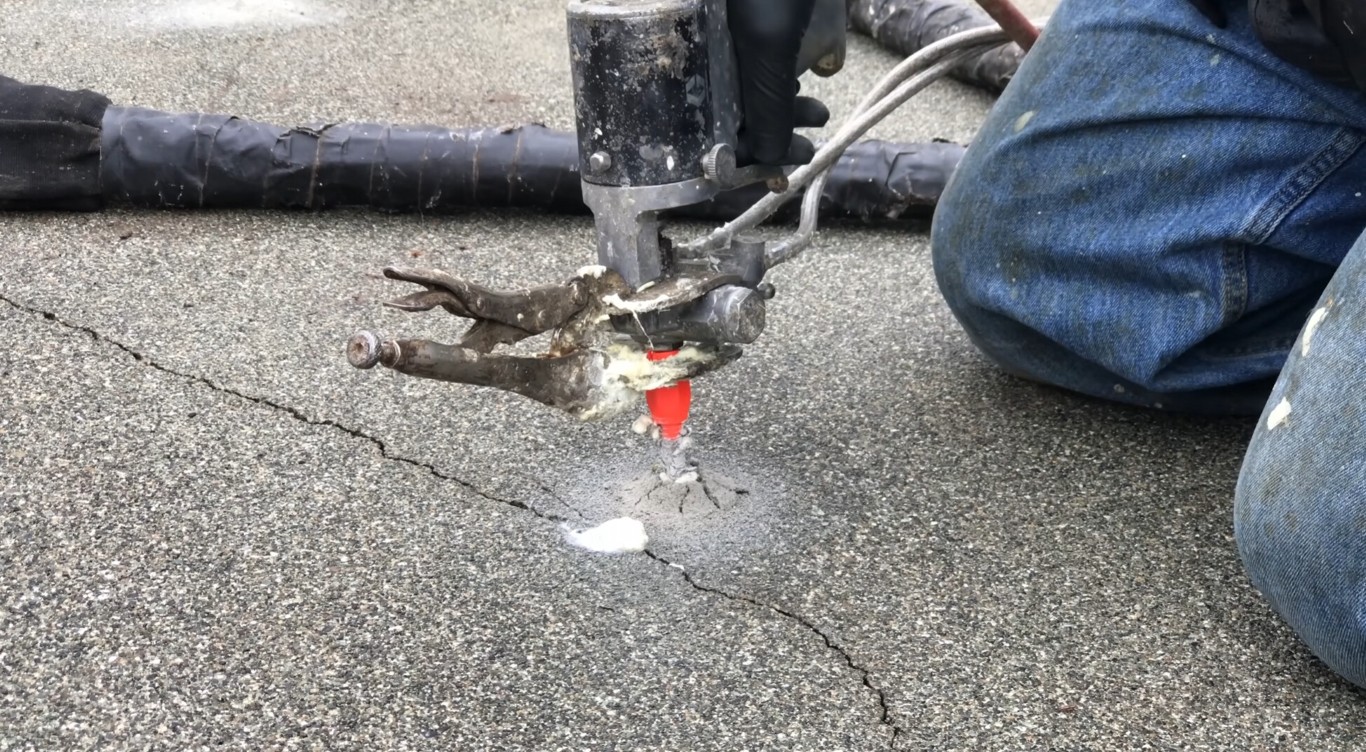
- •Mudjacking: We drill small holes through the concrete and pump a cement-based slurry underneath. The slurry fills voids and lifts the slab. Works great for driveways, sidewalks, and patios.
- •Polyurethane foam injection: Similar process but uses expanding foam instead of slurry. The foam weighs less, sets faster, and will not wash away. Better for areas with ongoing water issues.
- •Combination approach: For complex settling, we sometimes use both methods. Foam stabilizes deep voids while mudjacking handles shallow areas.
The process is quick and minimally invasive. We drill penny-sized holes, pump the lifting material underneath until the slab reaches the right height, then patch the holes to match the surrounding concrete. Most jobs take just a few hours from start to finish.
You can walk on leveled concrete immediately. For driveways, wait about 24 hours before driving on them with mudjacking, or just a few hours with foam. Compare that to concrete replacement, which takes days to cure and a week or more before you can drive on it.
Surfaces We Can Level
Concrete leveling works on almost any horizontal surface that has settled. If your concrete is structurally sound but just sits too low, we can probably lift it. Here are the most common applications.
Driveways are our most frequent leveling jobs. Sections near the garage or street often settle first because water collects there. Uneven driveway sections create puddles, damage vehicle undercarriages, and look terrible. Leveling fixes all these problems in one day.
Sidewalks and walkways develop trip hazards as they settle. A one-inch height difference between sections can trip someone, especially kids and older adults. Leveling eliminates these hazards and prevents potential liability issues for property owners.
Patio slabs that slope toward your house cause water problems. Rain runs toward your foundation instead of away from it. This leads to basement flooding, foundation damage, and moisture issues. Lifting and releveling your patio protects your home.
Pool decks settle from soil erosion and water infiltration. Uneven decking looks bad and creates puddles that attract mosquitoes. We level pool deck sections so water drains properly and the surface stays safe.
Garage floors, warehouse slabs, and commercial flatwork all qualify for leveling. If it is concrete and it has settled, we can likely raise it back up. The only exception is concrete with major structural damage like widespread cracking or complete failure.
Keeping Your Concrete Level
Leveling your concrete fixes the immediate problem, but you want to prevent future settling. Addressing the root causes keeps your concrete stable for years to come.
Water management is the single most important factor. Make sure gutters and downspouts direct water away from concrete surfaces. Check that the ground slopes away from slabs so water runs off instead of pooling. Fix any leaking pipes or irrigation systems that might be washing away soil.
Fill any gaps between concrete sections with quality joint sealant. These gaps let water seep underneath where it erodes soil. Sealing them keeps water on top where it drains away harmlessly. Reseal every few years as the material wears out.
Consider adding drainage solutions if water is a persistent problem. French drains, channel drains, or regrading can redirect water away from problem areas. These investments prevent not just settling but also foundation damage and basement flooding.
Polyurethane foam leveling provides better long-term stability in areas with water issues. The foam will not wash away like traditional mudjacking material can. It also seals voids so water cannot flow under the slab as easily. For chronic settling problems, foam is often worth the extra cost.
Common Questions About Concrete Leveling
Fix Your Sunken Concrete Today
Stop living with trip hazards and uneven surfaces. Visit our homepage to learn more about SCL Socorro Concrete, or contact us for a free leveling assessment and quote.