Concrete Slab & Foundation Work
Build on solid ground with professional concrete slabs and foundation work that lasts for decades.
Why Your Foundation Is Everything
Everything you build sits on its foundation. If your foundation is weak or poorly constructed, nothing above it will be stable. Cracked walls, uneven floors, and stuck doors all trace back to foundation problems. That is why getting it right from the start matters so much.
In Socorro, concrete slab foundations are the most common choice for homes, sheds, garages, and additions. They work well in our climate and soil conditions. A properly built slab distributes weight evenly, resists settling, and lasts as long as your structure does.
We handle both new construction foundations and slab work for additions or standalone structures like workshops and garages. Whether you are building from scratch or expanding your property, we make sure your foundation is level, strong, and built to code.
Foundation work is not something you want to cut corners on. Fixing foundation problems after construction costs way more than doing it right the first time. We take the time to prepare the site properly, use quality materials, and follow best practices so your foundation performs for decades.
Different Types of Concrete Slabs
Not all concrete slabs are the same. The type you need depends on what you are building and how you will use the space. Here are the most common options we install in Socorro.
Common slab types and their uses:
- •Slab-on-grade: The most basic and affordable option. Concrete pours directly on prepared ground. Perfect for sheds, workshops, and simple garage floors.
- •Monolithic slab: Foundation and floor poured in one piece. Common for homes and buildings. The thickened edges act as a built-in foundation.
- •Stem wall slab: A short concrete wall forms the perimeter, then the slab pours inside. Raises the structure slightly and works well on uneven terrain.
- •Post-tension slab: Steel cables run through the concrete and get tensioned after it sets. Extra strength for larger structures or problem soils.
Which type you need depends on your building plans, soil conditions, and local building codes. We assess your site and recommend the right foundation for your project. For simple projects like a new concrete driveway or storage shed, a basic slab-on-grade usually works great.
How We Build Your Foundation
Foundation work takes precision and patience. We follow a detailed process to ensure your slab is level, stable, and ready to support your structure for years to come.
Site preparation comes first. We clear vegetation, level the ground, and excavate to the proper depth. Soil testing helps us understand what we are working with. Some soils compact better than others, and we adjust our approach based on what we find.
Next, we install a base layer of crushed stone or gravel. This provides drainage and prevents the slab from settling unevenly. We compact it in layers using heavy equipment. Skipping this step or doing it poorly leads to cracks and uneven floors later.
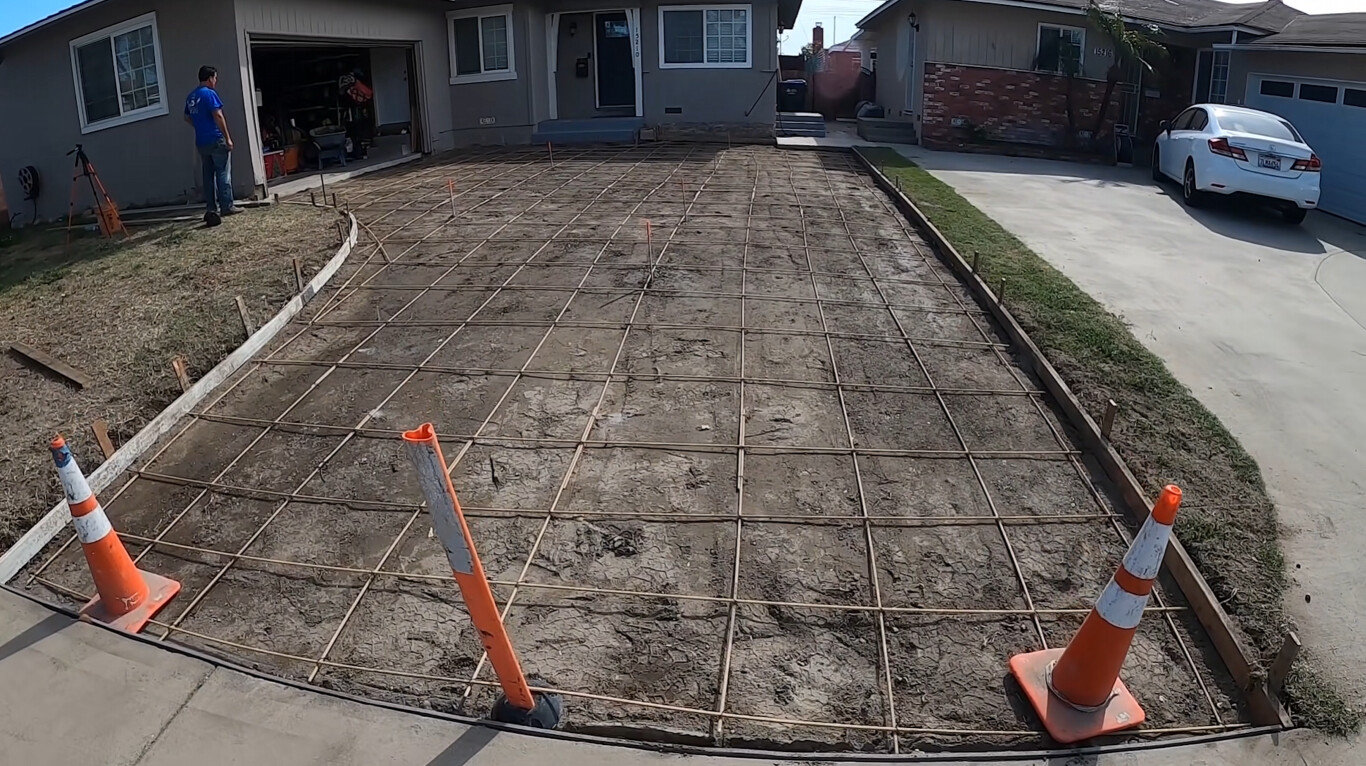
We then install forms to shape the slab and add steel reinforcement. Rebar or wire mesh strengthens the concrete and helps control cracking. For foundations, we also install any necessary plumbing or electrical conduits before pouring.
Pouring and finishing happen in one continuous process. We pour the concrete, level it precisely, and finish the surface. Curing takes several days. We keep the concrete moist and protected so it develops full strength. Most foundations cure for at least a week before framing or construction continues on top.
Preventing Common Foundation Problems
Most foundation problems come from poor drainage, inadequate soil prep, or rushing the work. We take steps to avoid these issues so your foundation stays solid.
Water is the enemy of foundations. If water pools around your slab, it softens the soil underneath and causes settling. We grade the site properly so water drains away from your foundation. We also make sure gutters and downspouts direct roof water away from the structure.
Expansive soils are common in parts of Texas. These soils swell when wet and shrink when dry, which can crack foundations. Proper base preparation and reinforcement help manage this movement. In severe cases, we recommend additional measures like deeper excavation or engineered fill.
Thickness matters too. Standard residential slabs are usually 4 to 6 inches thick, but heavier structures need more. We calculate the right thickness based on what your slab will support. Trying to save money by going too thin ends up costing more when you have to fix it later.
Already dealing with foundation issues? Our concrete repair services can assess and fix many foundation problems before they get worse.
Common Questions About Slabs and Foundations
Ready to Build on Solid Ground?
Need a foundation for your next project? Visit our homepage to learn more about SCL Socorro Concrete, or contact us today for a detailed quote on your foundation work.